
Rewriting the World
By Bob Hembree
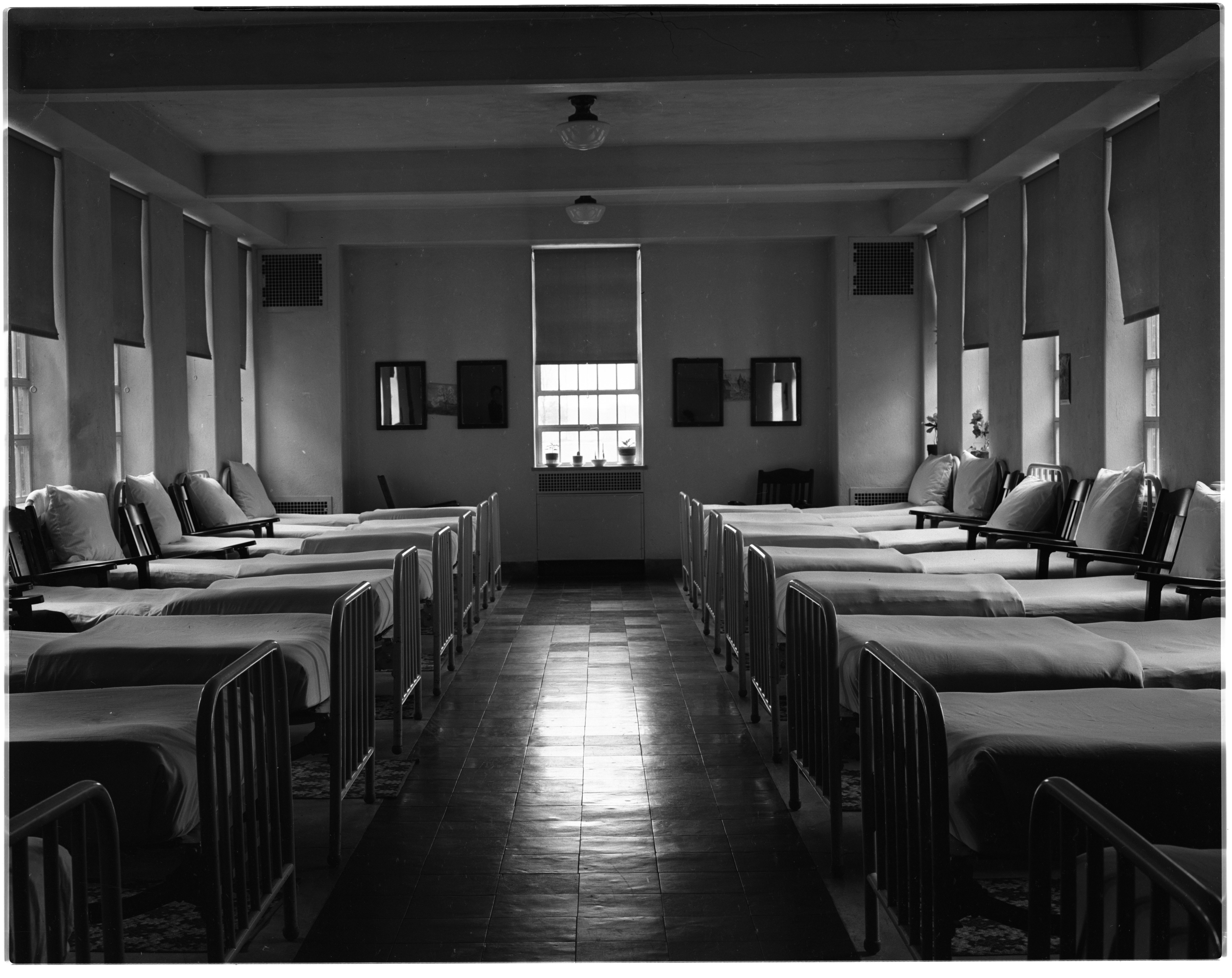
It begins as a quiet parable: three men in adjacent beds beneath the murmuring fluorescent glow of a 1959 psychiatric ward. Their breathing forms a strange rhythm in the night, like three different psalms sung in different keys. Each man carries a truth that has hardened into identity: I am Jesus Christ. Identity as declaration, identity as fortress.
But the story does not begin with them. It begins with two Marys in Maryland.
When the second Mary declared her sacred motherhood, the first felt the ground tilt beneath her feet. Through this improbable mirror, she glimpsed her self-image from the outside. The spell thinned. Reality shifted. A river of doubt trickled in and washed away the belief that had once been bedrock. And so she left the ward and returned to the world.
Two Marys. Two worlds. One reality survived.
Milton Rokeach saw this and imagined that contradiction was a solvent. He failed to understand it was more often a catalyst. He believed reality would assert itself with the force of gravity. Instead, he discovered that identity floats in its own atmosphere.
We wander now through Ypsilanti’s corridors, hearing them debate.
“You are a creature!”
“I am the Good Lord!”
“You oughta worship me!”
Those voices echo like competing liturgies. They form a strange litany of overlapping cosmologies. We can almost hear Rokeach’s breathing as he observes, notebook in hand—not neutral, no longer merely chronicling—but intervening.
And here my thoughts splinter into a braided current.
I. The Self as Architect of Reality
When faced with contradiction, each Christ does not collapse inward. He expands outward.
One dismisses the others as feeble-minded.
Another calls them imposters.
A third rewrites their very humanity—declaring them machines animated by unknown operators.
They don’t yield to the external world. They remodel it.
A worldview under threat does not surrender—it invents new continents.
And outside the ward, we see the same pattern:
political belief mutating to accommodate new contradictions,
religious doctrine shape-shifting across centuries,
national myths smoothing rough edges of history.
Belief is not glass. It is coral. It grows around obstacles.
This is not madness. It is human.
II. The Psychologist Who Believed He Was a God
Rokeach—so confident in his method—became the unseen fourth deity in this strange pantheon. He imagined himself corrective agent, bearer of truth, dispenser of rational light.
He forged letters.
He staged narratives.
He manipulated love.
Picture him in his office, composing fictional correspondences as though summoning spirits into existence. His lies were sanctioned by science, his improvisations wrapped in the white coat of authority. In his mind, he was bending delusion toward truth.
Only years later did he see the irony:
he was the one whose delusion was framed by power, socially reinforced, institutionally blessed.
The others claimed divinity.
He acted as though he possessed it.
III. Allegiance to Invented Realities
Here is the quiet revelation beneath the spectacle:
Reality is not merely observed.
It is negotiated.
And those with power—doctors, governments, media empires, religious leaders, charismatic visionaries, wealthy architects of narrative—broadcast worlds that millions step into willingly. We choose our realities the way we choose our languages: inherited, reinforced, rarely questioned.
This experiment is not just a psychological episode.
It is a metaphor for the human condition.
Who among us has not clung to an idea past its expiration?
Who among us has not framed evidence to protect a cherished self-image?
Who among us has not believed the story that made life bearable, even if it bent the visible world?
IV. Identity as Sacred Territory
“Truth is my friend. I have no other friends,” Leon, the third Christ, said, withdrawing after the cruel revelation that affection had been falsified.
That sentence cracks open like a geode.
Truth—not the provable, mathematical kind—but the inward, sustaining kind—was all he had left. For him, truth was not empirical. It was existential. And when the world contradicted him, he did not discard his identity. He protected it.
We do not revise the self easily. The self is our shelter.
When reality scratches at the door, many of us bolt it shut.
V. Rewriting the World
So the lesson that emerged from now-abandoned Ypsilanti Asylum was not that delusion is impervious. It is that belief is adaptive. The three Christs could not integrate their realities with each other, so each invalidated the others’ existence.
We see echoes everywhere:
When confronted with historical atrocities, some nations declare them myths.
When faced with climate evidence, some reinterpret data until the oceans themselves seem mistaken.
When confronted with systemic injustice, some insist the system is sound and perception is flawed.
Faced with contradiction, some rewrite the world rather than the self.
VI. What Rokeach Learned Too Late
By 1984, Rokeach wrote with uncharacteristic humility that he “had no right… to play God.”
In that moment, he stepped down from his invisible throne.
The experiment never cured the three Christs.
But they cured him of his omnipotence.
And perhaps this is the quiet, enduring wisdom:
that the power to define reality—whether in a psychiatric ward or a civilization—is a burden requiring humility, not certainty.
VII. Closing Reflection
Three men clung to divine identity.
A doctor clung to intellectual supremacy.
In their collisions, we glimpse the stubbornness of belief.
We learn that truth is not always the firmer stone. Often, identity is.
We learn that the world we walk through is half geography and half story.
And we learn, finally, that to challenge someone’s reality is to trespass upon their emotional homeland. If we are to engage belief—our own or others’—it must be with the tenderness of an archaeologist brushing dust from fragile bones.
Because in the end, we are all rewriting the world—and hoping someone will step inside and believe it with us.
November 30, 2025