
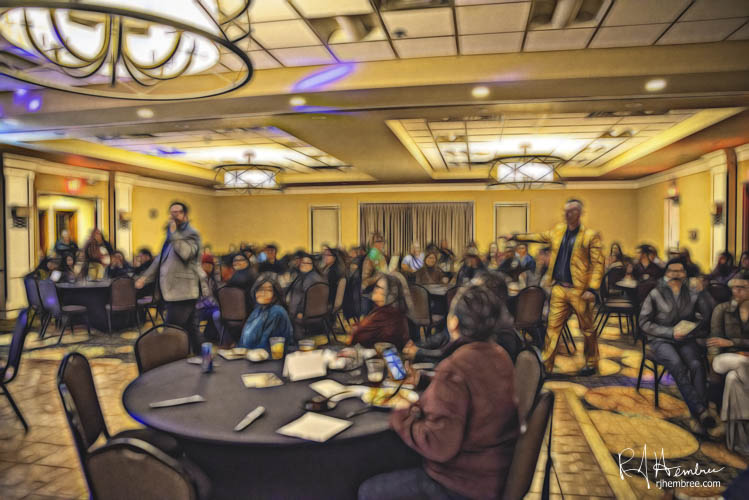
 Every few years, popular culture finds a new vocabulary to diagnose a very old discomfort. We seem endlessly preoccupied with cataloging the mechanics of our presence among others—measuring whether an evening out leaves us restored or hollowed, whether our natural posture leans toward the hearth or the crowd. For decades, the shorthand was clean, polite, and binary: one was an introvert, cautious and self-contained, or an extrovert, expansive and nourished by the noise.
Then came the compromises. The “ambivert” arrived to rescue those who recognized themselves in neither extreme, offering the flattering portrait of a person in perpetual psychological equilibrium. More recently, social platforms have seized on the “omnivert”—a label meant to describe the friend who holds court with magnetic verve on a Friday night, then drops into radio silence by Sunday afternoon. In the digital telling, the omnivert doesn't occupy the middle ground so much as careen between cliffs, swinging from incandescent social dynamo to monastic recluse with the abruptness of a thrown breaker.
Yet these taxonomies tend to flatter a misunderstanding. They treat social energy as an innate, static property—a fixed engine under the hood that simply runs on one of two fuel mixtures. We speak of our social capacity as though it were a personal character trait, steady and portable from one room to the next. In practice, almost no one experiences it that way.
Most of us are neither serenely balanced arbiters nor victims of an erratic, swing-happy psyche. We are, instead, contextual flexers. Our stamina doesn't reside purely within us; we negotiate it in real time with the specific room we occupy. The sudden collapse into silence that looks so dramatic from the outside is rarely a mysterious mood swing. It is simply the bill coming due for the environment's hidden friction.
The Invisible Tariff of Surveillance
To understand why the same person can converse effortlessly until midnight at a kitchen table yet feel utterly spent after forty-five minutes at a conference reception, one must examine the invisible overhead of social life. Every interaction carries a tariff, but the currency demanded varies wildly.
The first and most punishing variable is the degree of surveillance a room requires. In a high-trust setting—among longtime friends, seasoned collaborators, or family members whose goodwill is beyond question—the cognitive burden is remarkably low. You don't draft a thought three times before speaking it; you don't monitor your inflection to ensure it carries no unintended hostility. The environment provides a safety net that permits half-finished sentences and comfortable lulls. With little performance to maintain, energy expenditure stays proportional to the conversation itself. In these rooms, even an otherwise solitary soul can linger for hours without accumulating debt.
Drop that same person into an unfamiliar room, however, and the brain immediately switches into an active reconnaissance mode. Every exchange requires rapid calibration: decoding unspoken hierarchies, gauging the room’s tolerance for irony, assessing which topics are safe and which carry social tripwires. This is not necessarily malice or paranoia; it is the natural consequence of crossing an unfamiliar border. But vigilance is metabolically expensive. When every remark must be edited for clarity, diplomacy, and posture before leaving the mouth, an hour of cocktail chatter consumes more cognitive bandwidth than a day of solitary labor.
The Economy of Words: Ceremony Versus Substance
The nature of the social currency being traded compounds this tax. We often conflate socialization with conversation, but small talk and substantive exchange belong to different economic categories. Small talk is primarily transactional: it establishes that neither party is armed and that both comply with the tribe's customs. It demands enthusiasm without depth, pleasant agreement without vulnerability, and an unflagging cheerfulness that admits no fatigue. It requires you to inhabit a stylized version of yourself—an agreeable ambassador sent out to represent your interests.
Substantive conversation, by contrast, shifts attention from the performers to an object. When two people discuss a book, debate a municipal zoning ordinance, troubleshoot a mechanical repair, or compare notes on an intricate craft, they are no longer managing their mutual impressions. They are looking together at a third thing. That shift in geometry transforms the encounter. The anxious friction of personal presentation gives way to shared focus, which is inherently steadying. An evening spent parsing an idea can leave a person mentally engaged and physically calm; an hour spent discussing the traffic and the weather while holding a plastic cup of lukewarm chardonnay can induce acute exhaustion.
The Unscripted Guest and the Open Door
There is also the matter of role clarity. People tolerate demanding social environments surprisingly well when they know exactly what is expected of them. The host who must check the roast, refill drinks, and introduce newcomers operates at a high metabolic rate, yet task clarity provides structure. The craftsman demonstrating a technique, the journalist conducting an interview, or the musician on a stage works hard, but the role's boundaries are clear.
The greatest fatigue belongs to the unscripted guest—the person dropped into a diffuse gathering with no specific function other than to "mingle." Mingling requires you to invent both the script and the purpose on the fly. You must continually calculate how to enter a circle, sustain a thread, and detach without causing offense. It is improvisation without an agreed-upon premise, and it drains the reserve far faster than formal work ever could.
Compounding this is the psychological lever of exit agency. Nothing accelerates social collapse quite like feeling trapped. When you arrive at an event knowing you can slip away the moment your capacity flags, your endurance paradoxically expands. The open door acts as an emotional buffer; knowing escape is available keeps claustrophobia at bay. Conversely, when leaving carries social penalties—when you are carpooling with colleagues, seated at a long banquet table, or attending an obligatory family function where early departure is treated as an insult—the ambient dread of being unable to retreat acts as a slow drain. The meter runs twice as fast simply because the exit is locked.
The Breaker Trips: When the Deficit Comes Due
When a contextual flexer reaches the end of their bandwidth in a high-friction room, the transition rarely happens incrementally. We like to imagine that social fatigue announces itself with a gentle, polite warning light—a slow dimming that permits an orderly farewell. In reality, it operates more like an electrical circuit.
To remain warm, attentive, and socially agile in a demanding environment requires continuous executive control. You are actively suppressing fatigue, filtering irritations, and forcing facial muscles into expressions of receptivity. This effort masks the deficit from everyone, often including the person performing it. You appear lively because the engine is running on full throttle. But once that reserve of executive control is burned through, the masking apparatus fails all at once. The smile vanishes; the desire to contribute dissolves into an urgent, visceral need for quiet.
To the outside observer, this sudden shift feels alarming, almost punitive. The person who was the life of the room at eight o’clock is staring blankly into the distance by nine-thirty, or quietly retrieving their coat without saying goodbye. The immediate assumption is interpersonal: Did something happen? Did someone offend them?
In truth, nothing happened except arithmetic. The bill simply came due. What looks like aloofness or moody withdrawal is merely the biological tax on prolonged performance. The subsequent days of quiet—the unanswered texts, the refusal of invitations, the retreat into domestic solitude—are not evidence of an unstable disposition or a sudden contempt for community. They are restorative maintenance. The nervous system is quietly discharging the accumulated sensory static of the encounter.
Reading the Terrain
We would do well to stop treating these shifts as personality defects, and perhaps just as well to stop inventing clinical-sounding boxes to explain every nuance of human behavior. Consistency across all rooms is not a virtue; more often than not, it is merely a sign of insensitivity to the room's climate.
The goal is not to force oneself into the unchanging equilibrium of the idealized ambivert, nor to surrender to the dramatic swings of an omnivert narrative. The real work is simpler and more practical: it is learning to read the terrain. It means recognizing which environments demand heavy surveillance and which offer ease; choosing substance over mere ceremony whenever possible; ensuring there is always a clear path to the door; and allowing the silence that follows a loud room to arrive without guilt or explanation.